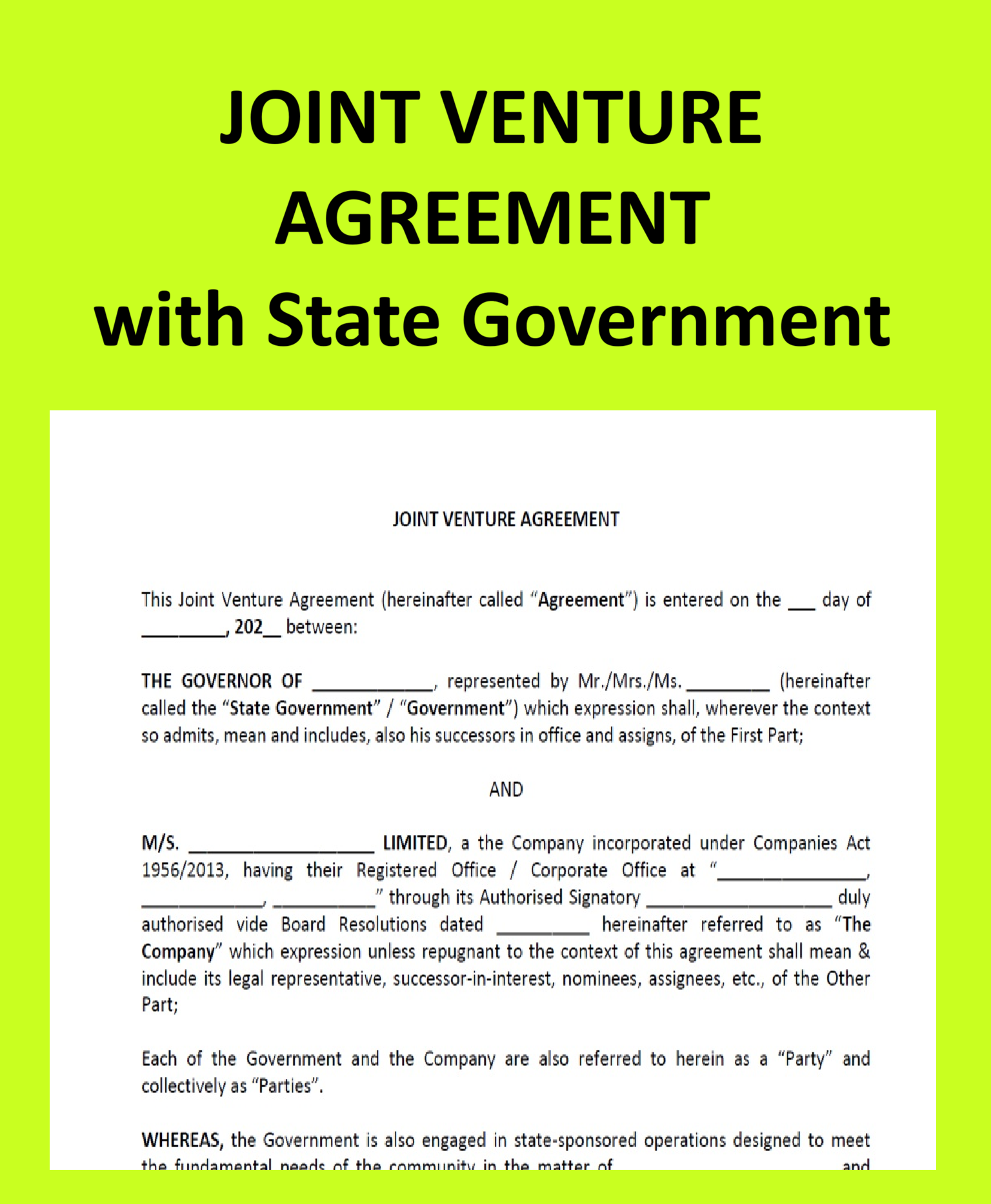
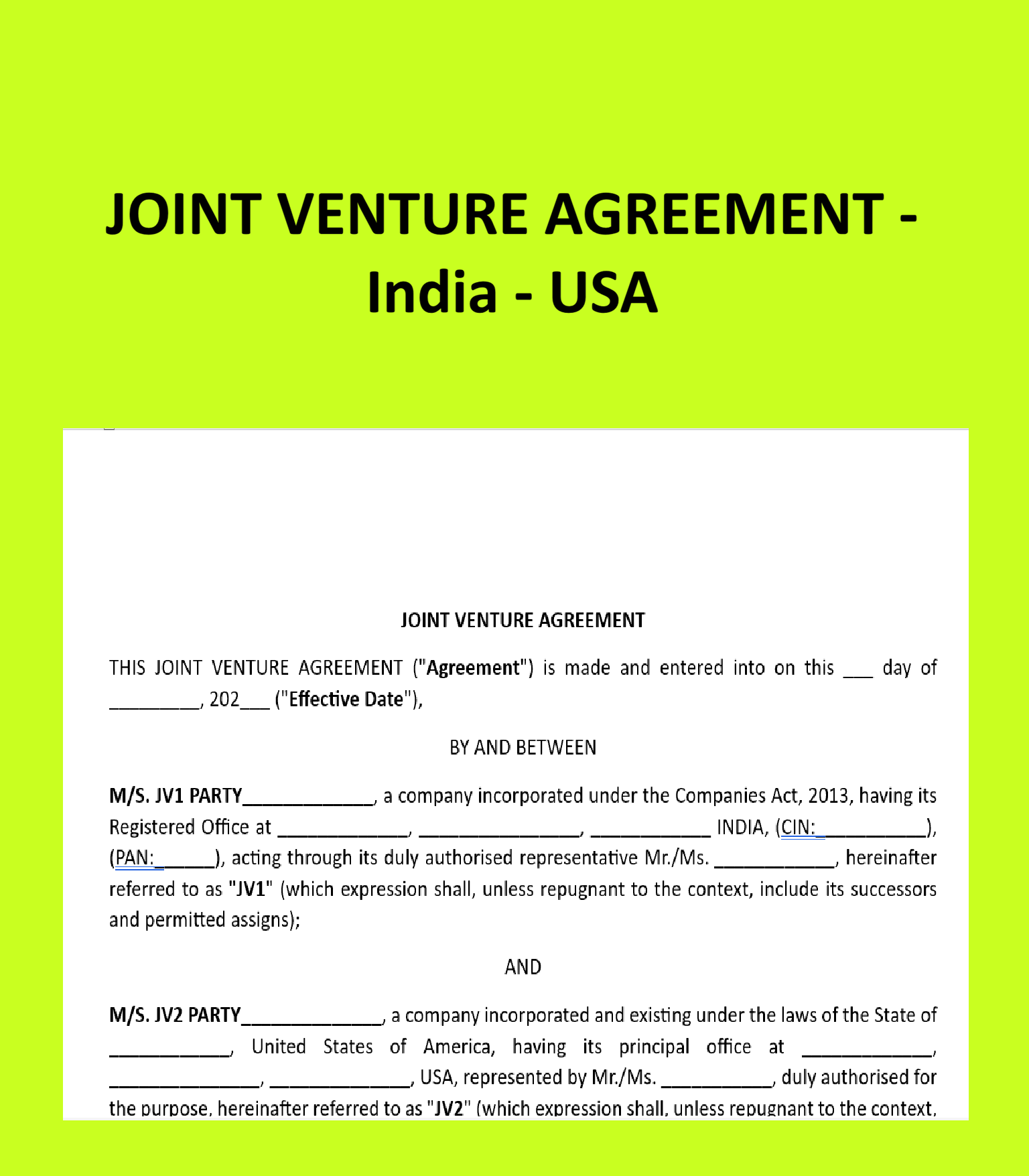
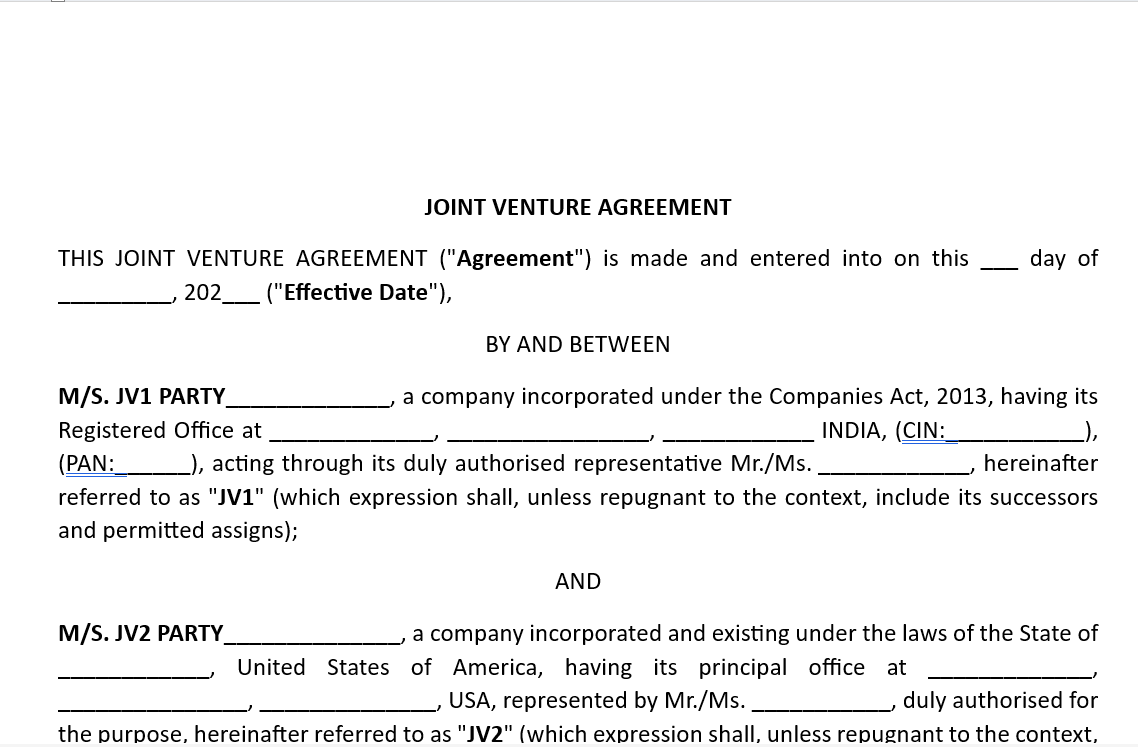
A U.S.–India joint venture agreement is a cross-border business collaboration where a United States company and an Indian entity pool resources, split equity, and share management control to achieve shared commercial, technological, or defense objectives within or outside India. Core Legal Framework in IndiaGoverning Law: Regulated by the Companies Act, 2013, the Indian Contract Act, 1872, and Foreign Exchange Management Act (FEMA) guidelines for cross-border capital flows.Foreign Direct Investment (FDI): Subject to sectoral caps; many sectors allow 100% FDI via the automatic route, while others require government approval.Structure: Can be incorporated as a private limited company, a limited liability partnership (LLP), or through contractual project-specific alignments. Essential Clauses in a Bilateral JVScope and Purpose: Clear definition of commercial objectives, target markets, and operational boundaries.Management & Control: Board representation proportionate to equity sharing, quorum rules, and deadlock resolution mechanisms.IPR and Technology Transfer: Explicit terms protecting intellectual property rights, licensing, and compliance with U.S. export controls (such as ITAR/EAR) if defense or dual-use tech is involved.Exit Strategy: Buy-sell provisions, lock-in periods, tag-along/drag-along rights, and valuation methods upon termination.Dispute Resolution: Choice of governing law and forum selection, commonly utilizing international arbitration seats (e.g., Singapore, London, or New York) alongside Indian jurisdiction.
Similar Products