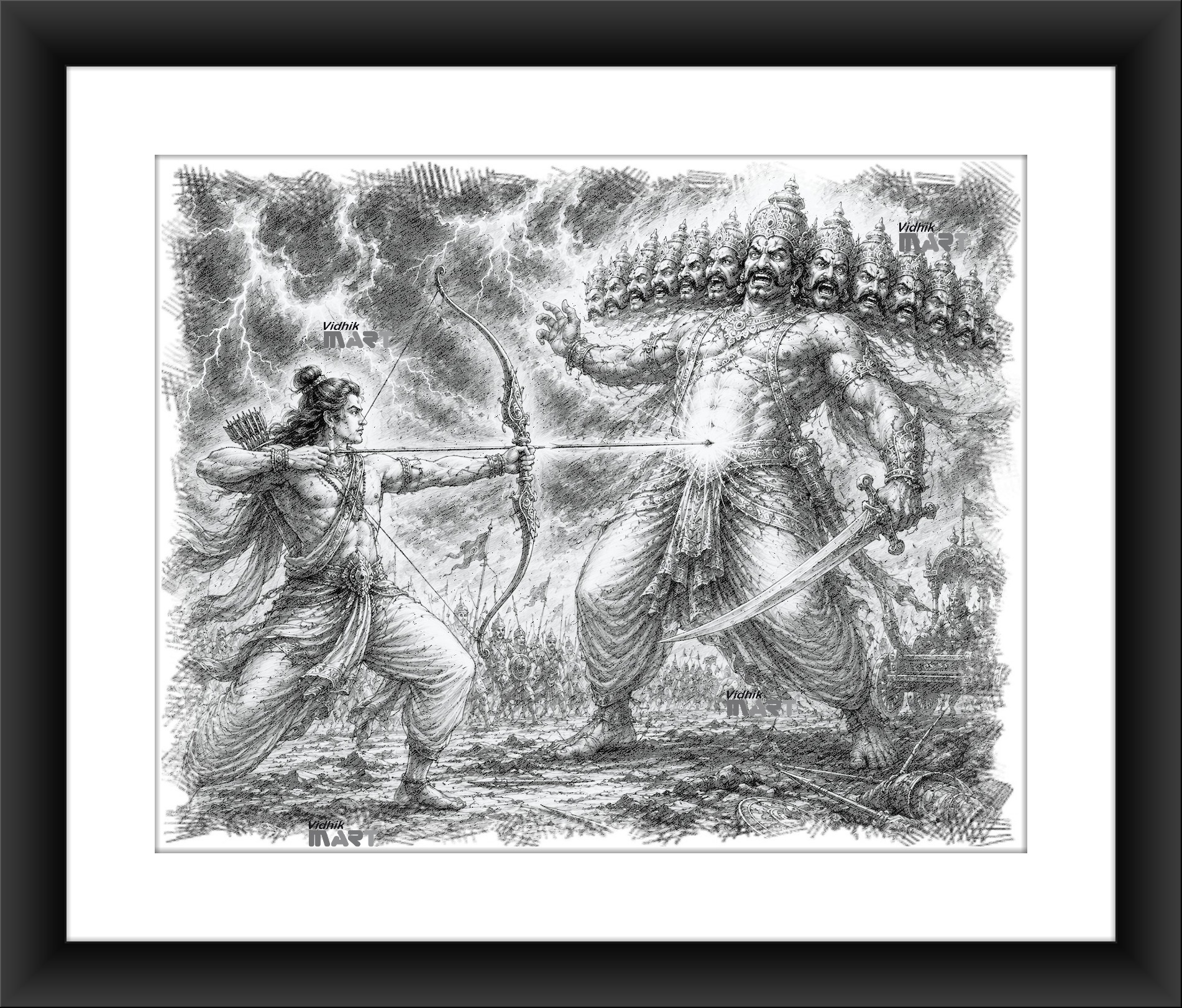
Ravan Vadh (the slaying of Ravana) is the climax of the ancient Indian epic, the Ramayana. It marks the ultimate defeat of the ten-headed demon king of Lanka, Ravana, by Lord Rama and symbolizes the victory of dharma (righteousness) over adharma (unrighteousness).
Key Events Leading to the Battle
Abduction of Sita: Driven by pride and desire, Ravana abducted Lord Rama’s wife, Sita, and held her captive in Lanka.
Building the Sethu: Lord Rama, accompanied by his brother Lakshmana, Hanuman, and the Vanara (monkey) army, constructed a bridge across the ocean to reach Lanka.
The War in Lanka: A fierce battle took place in Lanka where Rama's forces defeated Ravana's chief commanders, including his brother Kumbhakarna and his powerful son Indrajit (Meghnada).
The Final Duel
Divine Intervention: Recognizing that Ravana was fighting from a chariot while Rama was on foot, King Indra sent his divine chariot and his charioteer, Matali, to assist Lord Rama.
The Regeneration of Heads: During the intense duel, whenever Rama severed one of Ravana's heads or arms, a new one immediately sprouted in its place due to Ravana’s boons.
The Secret of Amrita: Vibhishana (Ravana's righteous brother who joined Rama) revealed that Ravana possessed Amrita (the nectar of immortality) stored near his navel (nabhi), which kept him alive.
The Brahmastra: Guided by Matali and Vibhishana, Lord Rama invoked the sacred Brahmastra—a divine arrow created by Lord Brahma. Rama aimed the arrow directly at Ravana’s navel, drying up the nectar of life and bringing the ten-headed king down.
Cultural & Festival Significance
Dussehra (Vijayadashami): The day Lord Rama defeated Ravana is celebrated across India as Dussehra. Giant effigies of Ravana, along with Kumbhakarna and Meghnada, are burnt (Ravan Dahan) to mark the eradication of evil.
The 10 Heads Symbolism: Ravana’s ten heads spiritually represent the ten negative human vices: Kama (Lust), Krodha (Anger), Moha (Attachment), Lobha (Greed), Mada (Pride/Ego), Matsarya (Jealousy), Manas (Mind), Buddhi (Intellect), Chitta (Will), and Ahamkara (Ego).
- Photo Frame Size:
Delivery & returns
We deliver products only in India. For full details of the delivery options we offer, please view our Delivery information
We hope you’ll love every purchase, but if you ever need to return an item you can do so within a month of receipt. For full details of how to make a return, please view our Returns information
Similar Products