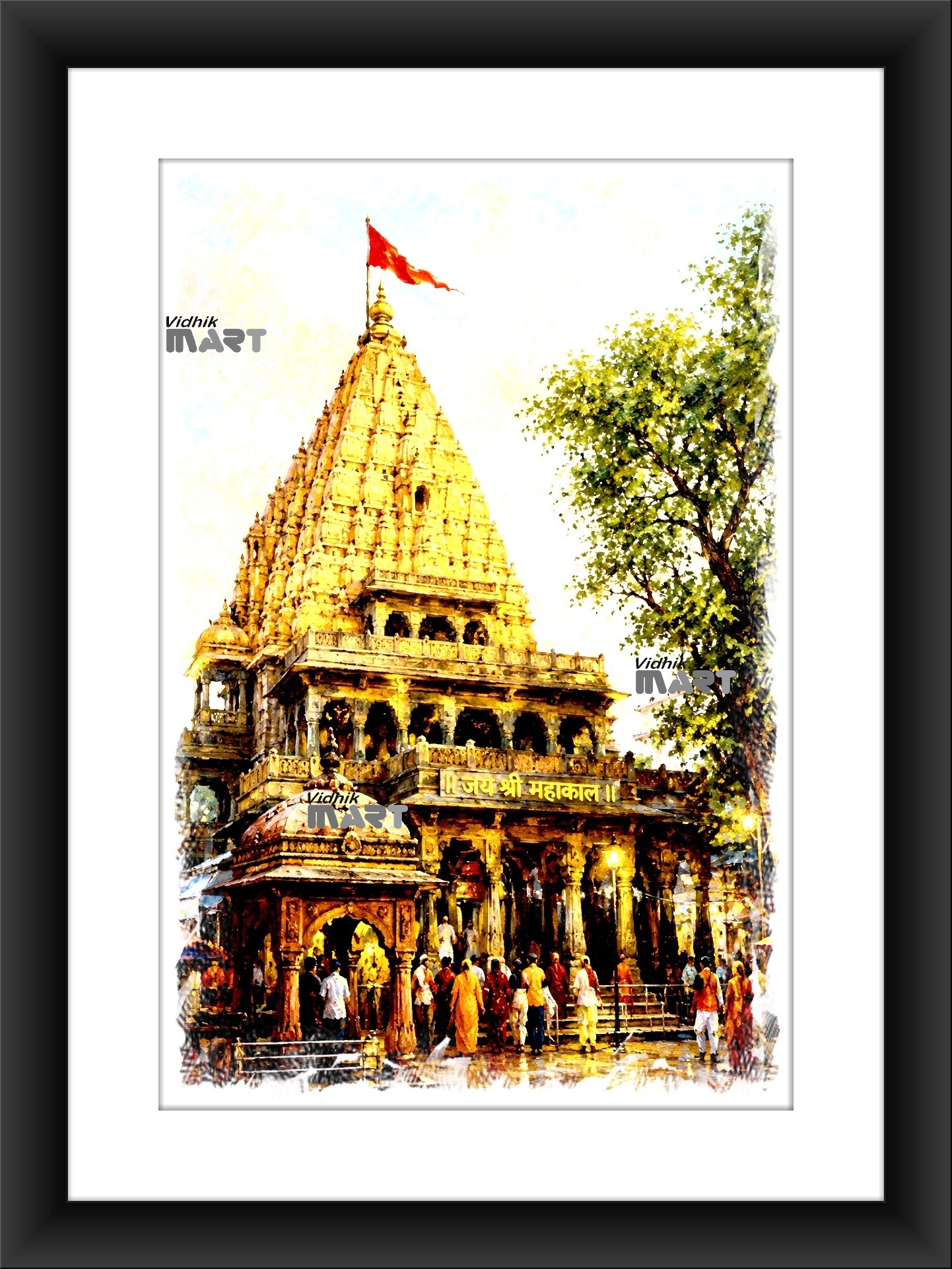
The Mahakaleshwar Temple in Ujjain, Madhya Pradesh, is one of the 12 sacred Jyotirlingas dedicated to Lord Shiva. Located on the banks of the Shipra River, it is unique as a Dakshinabhimukhi (south-facing) Jyotirlinga, a directional orientation associated with the mastery over time and death (Mahakal).
Ancient & Mythological Origins Pre-4th Century BCE According to the Puranas (specifically the Shiva Purana and Skanda Purana), Lord Shiva manifested here as a column of light (Jyotirlinga) to protect his devotees in Avanti (ancient Ujjain) from the demon Dushana. Classical Sanskrit literature, including Kalidasa's Meghadutam (4th century CE), gives vivid descriptions of the grand temple complex and its ritual evening dances.
Paramara Dynasty Golden Era 11th - 12th Century CE During the reign of the Paramara kings, the temple underwent major expansion. It was built in the Bhumija style of temple architecture, featuring elaborate stone carvings, multiple tiers, and surrounding water tanks like the Koti Tirth.
Destruction by Sultanate Forces 1234 - 1235 CE Sultan Shams-ud-din Iltutmish of the Delhi Sultanate invaded Ujjain and dismantled the main Mahakaleshwar temple complex. The central Jyotirlinga was submerged in the nearby Kotiteertha Kunda pond by priests to protect it from desecration.
Maratha Era Reconstruction 1731 - 1732 CE Following the expansion of Maratha rule in Malwa, Maratha general Ranoji Shinde and his court minister Ramchandra Baba Shenvi restored the temple complex. They retrieved the Jyotirlinga from the tank, rebuilt the main sanctuary, and established the current structural framework combining Maratha, Rajput, and Chalukyan architectural styles.
Modern Era & Mahakal Lok Expansion 2022 CE In October 2022, Phase 1 of the Mahakal Lok Corridor was inaugurated. This massive redevelopment project expanded the complex to over 900 meters with murals, 108 ornate pillars, and public plazas to accommodate millions of pilgrims annually.
Key Historical & Architectural Features
• Three-Tiered Sanctorum: The temple structure consists of three levels. The main subterranean sanctum houses the Mahakaleshwar Jyotirlinga; the middle level contains the Omkareshwar Linga; and the top floor houses the Nagchandreshwar shrine (opened to devotees only once a year on Nag Panchami).
• Bhasma Aarti: A unique ancient ritual where the deity is worshipped with sacred ash (bhasma), traditionally performed every morning before sunrise.
• Astronomical Significance: Ujjain was historically considered the prime meridian in Indian astrology and astronomy, earning it the status of the "city of time," deeply connected to Shiva as Mahakal (the master of Time).
Delivery & returns
We deliver products only in India. For full details of the delivery options we offer, please view our Delivery information
We hope you’ll love every purchase, but if you ever need to return an item you can do so within a month of receipt. For full details of how to make a return, please view our Returns information
Similar Products